








Sleep is often seen as a passive state—something we reduce first when life gets busy. But in reality, sleep is one of the most active and essential biological processes, and it directly determines your energy levels during the day.
Your energy is not created in the morning. It is recharged, regulated, and restored during sleep.
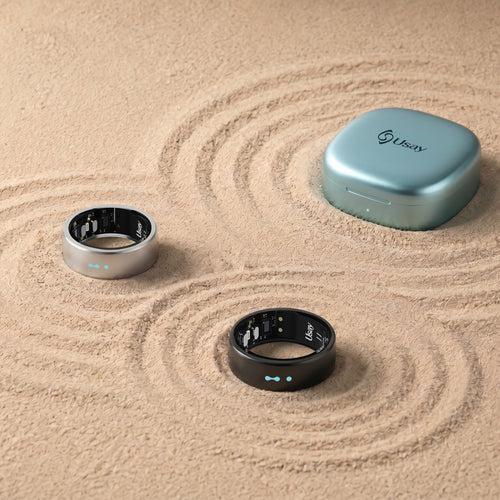
At Usay Ring 1, we analyze your sleep in a complete structure to help you truly understand how your body restores itself at night:
Awake, Light Sleep, Deep Sleep, and REM Sleep.
1. Sleep Is Your Body’s Energy Recharging System
Think of the human body as a battery.
During the day, you continuously consume energy through:
-
Physical activity
-
Mental focus
-
Emotional stress
-
Digestion and metabolism
Sleep is the process of recharging this system.
However, the body does more than simply refill energy—it performs recovery across multiple sleep stages.
If your sleep structure is incomplete, even long sleep may not fully restore your energy.
2. Four Sleep Stages Determine Your Recovery Quality
Usay Ring 1 divides your nightly sleep into four key stages:
Awake
Brief awakenings or interruptions during sleep. Frequent awakenings can disrupt sleep continuity and reduce recovery efficiency.
Light Sleep
A transitional and stabilizing stage where the body begins recovery and relaxation. It usually accounts for the largest portion of sleep.
Deep Sleep
The core physical recovery stage where the body repairs muscles, strengthens the immune system, and rebuilds energy reserves.
REM Sleep
The brain recovery stage responsible for memory consolidation, emotional regulation, and cognitive restoration.
Together, these four stages form a complete sleep cycle. Missing or reducing any stage can impact your next-day energy levels.
3. Deep Sleep Builds Physical Energy
During deep sleep, the body focuses on:
-
Muscle repair and growth
-
Tissue regeneration
-
Immune system strengthening
-
Hormonal regulation
This is the key stage that determines your physical recovery.
If deep sleep is insufficient, you may experience:
-
Heaviness in the body
-
Persistent fatigue after waking
-
Slower physical recovery during the day
4. REM Sleep Restores Mental Energy
REM sleep is responsible for:
-
Emotional stability
-
Memory processing and consolidation
-
Cognitive recovery
It directly affects your mental state the next day.
If REM sleep is insufficient, common effects include:
-
Poor concentration
-
Emotional instability
-
Mental fog
5. Sleep Quality Matters More Than Sleep Duration
Many people believe that “more sleep equals more energy,” but this is not necessarily true.
What truly matters is the quality and balance of your sleep stages.
Sleep quality can be affected by:
-
Stress levels
-
Irregular schedules
-
Late-night screen exposure
-
Poor sleep environment
Even with 8 hours of sleep, insufficient deep or REM sleep can still lead to fatigue.
6. The Sleep–Energy Feedback Loop
Sleep and energy form a continuous cycle:
-
Poor sleep structure → low daytime energy
-
Low energy → reduced activity and recovery efficiency
-
Reduced recovery → worse sleep the next night
Without intervention, this cycle can gradually lead to chronic fatigue.
7. Why This Matters
Understanding sleep structure helps you:
-
Build healthier daily routines
-
Identify fatigue early
-
Improve focus and productivity
-
Avoid long-term energy depletion
True health is not about “sleeping more,” but about “recovering better.”
Final Thought
Sleep is not just rest—it is a complete biological recovery system composed of four essential stages.
With Usay Ring 1, analyzing Awake, Light Sleep, Deep Sleep, and REM Sleep gives you a clear view of how your body restores energy every night.
When sleep structure improves, you will notice:
-
More stable energy
-
Better emotional balance
-
More predictable daily performance
In short:
You don’t wake up with energy—you regenerate it through sleep.